For one person a culinary weekend away means trying three different restaurants over three evenings. Another is happier with a morning market, a simple lunch with local produce and a wine bar later in the day. And yet another would rather save up for one special dinner. Good food is therefore a perfectly good reason to choose a destination, but what counts as "good" depends heavily on how you like to travel.
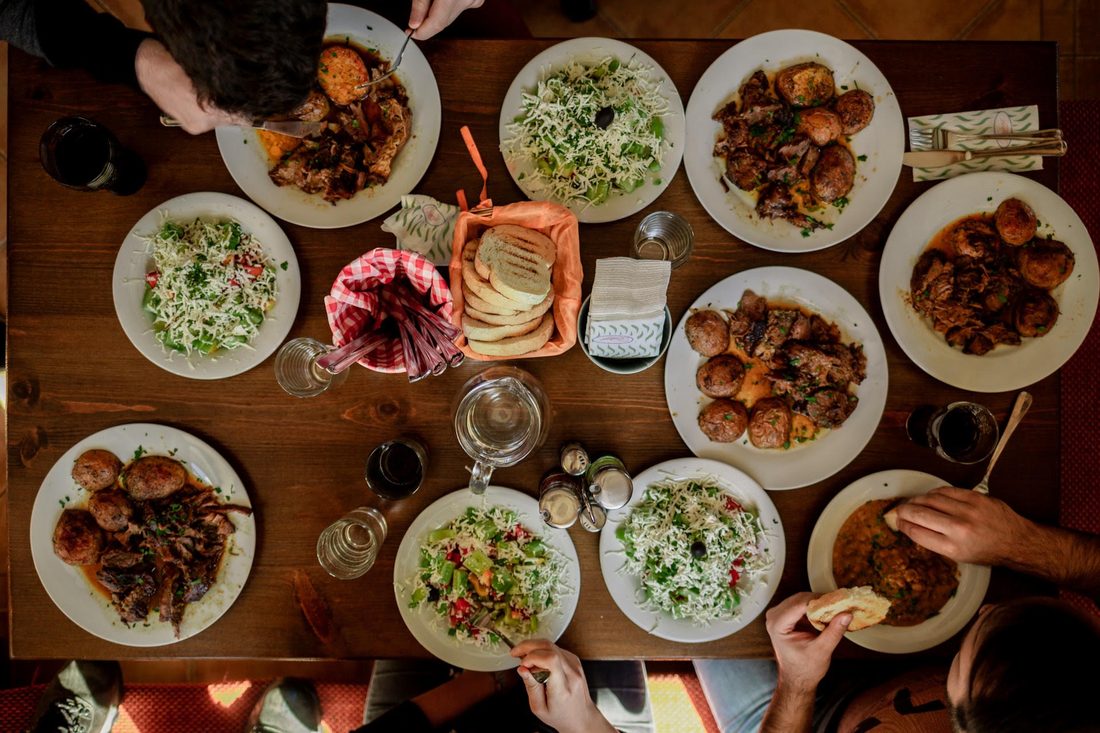
That's why below you won't simply find twelve cities with lots of restaurants. We compare local cuisine, wine, markets, price level, travel time and how many days you need. This lets you choose between, for example, pintxos in San Sebastián, fresh pasta in Bologna, street food in Palermo or Champagne tasting around Reims. Would you rather base your choice less on food and more on the city itself? Then also take a look at our guide to fun city trips in Europe. Do you already know what you like to eat and how much you want to spend, but not yet where you want to go? Then MyTripMatcher fits exactly that search.
Culinary weekend away at a glance
| Destination | Culinary strength | Best for | Travel time from the Netherlands | Budget | Ideal duration | Best period |
|---|---|---|---|---|---|---|
| Bologna | Fresh pasta and Emilian cuisine | Trattorias and markets | Flight approx. 1h45 | Average | 2-3 nights | Spring and autumn |
| Turin & Piedmont | Wine, chocolate and regional cuisine | Wine and long lunches | Flight approx. 1h40 | Average to higher | 3 nights | Spring and autumn |
| Palermo | Street food and Sicilian cuisine | Markets and affordable food | Flight approx. 2h50 | Lower to average | 3 nights | Spring and autumn |
| San Sebastián | Pintxos and fine dining | Casual and gastronomic | Via Bilbao: 2h05 flying + approx. 75 min bus | Higher | 3 nights | May-June, Sep-Oct |
| Porto | Portuguese cuisine and port wine | City + wine | Flight approx. 2h30 | Average | 3 nights | Apr-Jun, Sep-Oct |
| Seville | Tapas and markets | Trying lots of small dishes | Flight approx. 2h55 | Average | 2-3 nights | Spring and autumn |
| Lyon | Bouchons and French gastronomy | Classic French and fine dining | Flight approx. 1h35 | Average to higher | 2-3 nights | Spring and autumn |
| Reims & Champagne | Champagne and regional produce | A genuine wine weekend | Train from approx. 5h06 | Higher | 2-3 nights | Apr-Jun, Sep-Oct |
| Thessaloniki | Greek markets, meze and fish | Long meals and local food | Direct; approx. 3-4 hours | Lower to average | 3 nights | Spring and autumn |
| Ljubljana | Market, Slovenian cuisine and wine | Compact and surprising | Flight approx. 1h45 | Average | 2-3 nights | Apr-Jun, Sep-Oct |
| Brussels | Beer, chocolate and Belgian cuisine | Close by and plenty of variety | Train from approx. 1h56 | Average | 2 nights | All year |
| Vienna | Coffee houses, wine and classics | Eating as part of the culture | Flight approx. 1h45-1h50 | Average to higher | 3 nights | All year |
So the best choice isn't tied to the number of famous restaurants. Palermo, for example, can be more appealing than San Sebastián when you mainly want to eat at markets and don't want to book every meal well in advance. Champagne works precisely when wine is the main reason for the trip and you're fine spending less time in a city.
So first decide what kind of eater you are when travelling. After that it becomes much easier to narrow the twelve options down to two or three destinations.

Which culinary weekend suits you?
The most useful question isn't: where can you eat well? You can do that in almost every major European city. Ask instead what you feel like doing during the weekend.
Do you want to go from bar to bar, ordering something small each time? Then San Sebastián and Seville fit. Do you want to sit at the table for two hours in the afternoon and barely plan anything after that? Look at Bologna, Lyon or Turin. Do you want to combine food with wineries? Then Porto, Champagne and Piedmont change the comparison.
Your budget also makes a big difference. A destination with many Michelin restaurants can be culinarily interesting without you actually wanting to book a table there. In Palermo, Thessaloniki and Seville you can build an entire weekend around food without every meal having to cost a large amount.
Quick decision check
- Which cuisine do you most like to eat?
- How important is wine during the trip?
- Do you mainly want casual eating or one special dinner?
- Roughly how much do you want to spend per meal?
- Do you have two or three nights?
- How far do you want to travel?
- Do you want just a city, or also a wine region?
- How important are culture, beach or nature alongside food?
Do you have a maximum of two nights and want to lose little travel time? Then Brussels, Bologna and Lyon make more sense than Champagne or San Sebastián. Do you have three nights and is wine an important part of it, then Porto, Turin and Reims become more interesting.
For destinations where train accessibility weighs heavily, you can also use our comparison of a city trip by train.
The 12 best destinations for a culinary weekend away
Italian cities for pasta, markets and regional cuisine
Bologna - fresh pasta as the main reason for the trip
Bologna is perhaps the most logical Italian choice when food really has to take centre stage. Trattorias, osterias and the streets around the Quadrilatero lie close together, so you need little logistics. The local cuisine revolves among other things around tagliatelle al ragù, tortellini, mortadella, gramigna and crescentine. Bologna Welcome explicitly names fresh egg pasta as one of the foundations of the local cuisine.
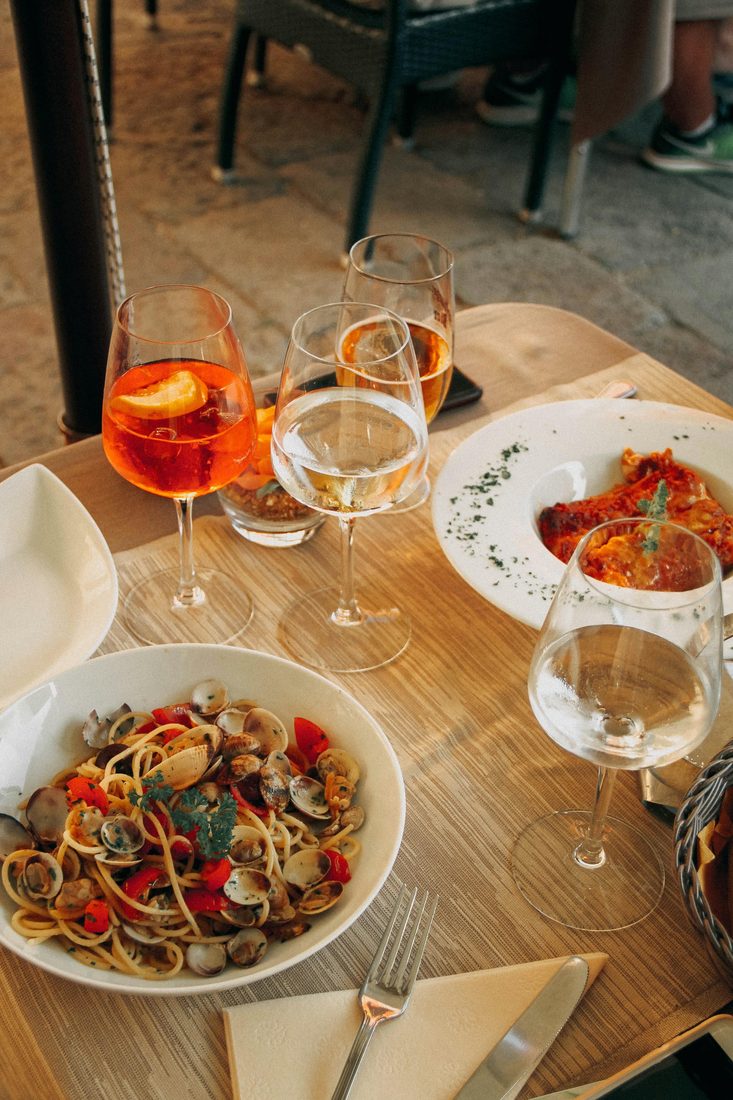
What should you try here? Tagliatelle al ragù, tortellini in brodo, mortadella and local filled pasta.
What does the weekend revolve around? Market streets, lunch in a trattoria, aperitivo and one more elaborate dinner.
Accessibility and stay: Amsterdam-Bologna takes roughly 1 hour and 45 minutes direct. Stay in or just around the historic centre.
Budget and best period: average. Spring and autumn work best; in midsummer Bologna can get quite hot.
Point to watch: the best known addresses fill up fast. Book one restaurant you really want to go to and keep the rest of the weekend more open.
Turin & Piedmont - pasta, vermouth and wine within reach
Turin works well if you want to combine a culinary city with the flavours of Piedmont. In the city itself you'll find agnolotti del plin, vitello tonnato, gianduiotto, bicerin and vermouth. The regional tourism organisation also names cheese, wine and chocolate as important parts of the local food culture.
What should you try here? Agnolotti del plin, vitello tonnato, bagna cauda, gianduiotti and bicerin.
What does the weekend revolve around? Historic cafés, aperitivo, restaurants and possibly one day towards the wine regions of Piedmont.
Accessibility and stay: KLM flies direct; the flight takes roughly 1 hour and 40 minutes.
Budget and best period: average in Turin, higher once wineries, transfers or more luxurious restaurants are added. Spring or autumn; November is extra interesting because of the truffle culture in Piedmont.
Point to watch: if you really want to head into the Langhe, transport becomes part of the planning. The city trip and the wine weekend aren't quite the same travel product.
Palermo - street food that tells the story of the city itself
Palermo is a strong choice when a culinary weekend precisely does not have to revolve around white tablecloths. The historic markets Ballarò, Capo and Vucciria are important places for the local street food culture. Think pane e panelle, arancine, sfincione and crocchè.
What should you try here? Arancine, panelle, sfincione, cannoli and, if you're curious, pani câ meusa.
What does the weekend revolve around? Markets in the morning, simple lunches, Sicilian pasta and eating around the historic centre in the evening.
Accessibility and stay: there are currently direct flights from Amsterdam; the flight takes around 2 hours and 50 minutes.
Budget and best period: lower to average. Spring and autumn.
Point to watch: the markets are lively and unpolished. Anyone mainly looking for a calm, luxurious weekend will probably find Bologna or Lyon more pleasant.
Spain and Portugal for pintxos, tapas and wine
San Sebastián - from pintxos bar to fine dining
San Sebastián is interesting because two completely different culinary weekends exist side by side here. You can visit several pintxos bars in a row in Parte Vieja, ordering one or two bites each time. At the same time, the city and its surroundings have an exceptionally strong offering of Michelin restaurants. The official tourism site describes pintxos as a standard way to discover Basque food culture.
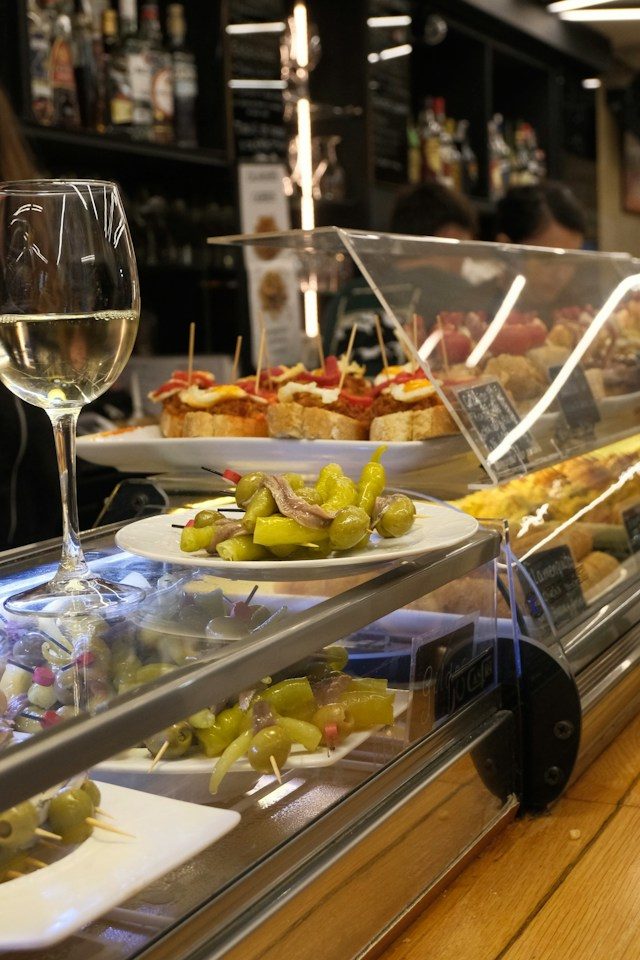
What should you try here? Pintxos, grilled fish, txangurro, kokotxas and Basque cheesecake.
What does the weekend revolve around? Pintxos hopping, fish, local produce and possibly one fine dining booking.
Accessibility and stay: flying via Bilbao is practical. Amsterdam-Bilbao takes around 2 hours and 5 minutes and the direct airport bus to San Sebastián about 75 minutes.
Budget and best period: higher, especially when fine dining is part of the plan. May, June, September and October.
Point to watch: the transfer makes two nights a bit short. For San Sebastián I would rather plan three nights.
Porto - Portuguese dishes with port wine literally across the river
Porto works well if you want a city and wine without immediately arranging a rental car for an entire wine region. The city has a clear cuisine of its own with francesinha, tripas à moda do Porto and rice with octopus. Across the Douro, in Vila Nova de Gaia, lie the well known port wine cellars.
What should you try here? Francesinha, tripas à moda do Porto, octopus, bacalhau and of course port.
What does the weekend revolve around? Bolhão market, Portuguese lunch, port tasting and restaurants on both sides of the river. The renovated Mercado do Bolhão remains an important food address in the city.
Accessibility and stay: a direct KLM flight takes roughly 2 hours and 30 minutes.
Budget and best period: average. April-June and September-October.
Point to watch: Porto is hilly. Choose your hotel wisely if you don't want to walk another twenty minutes uphill after an elaborate dinner.
Seville - a weekend that naturally breaks down into small dishes
Seville is strong when you like trying several places in one evening. Tapas here are not a tourist format but part of the local way of going out and eating. The official tourism site names, among others, montadito de pringá and solomillo al whisky, alongside markets such as Triana, Feria and Encarnación.
What should you try here? Pringá, fried fish, jamón, salmorejo and various tapas.
What does the weekend revolve around? Market in the morning, lunch on a terrace and one or two dishes per bar in the evening.
Accessibility and stay: Amsterdam-Seville takes roughly 2 hours and 55 minutes direct.
Budget and best period: average. Spring and autumn.
Point to watch: July and August are simply very hot for a food focused city trip. Spanish meal times are also later than many Dutch travellers are used to.
France and wine regions
Lyon - bouchons, markets and a serious French food culture
Lyon is a strong choice when you're looking for classic French gastronomy without everything having to be fine dining. The traditional bouchons serve local dishes such as quenelles, tablier de sapeur and tarte à la praline. There's even an official Bouchons Lyonnais label for restaurants that represent the local tradition.
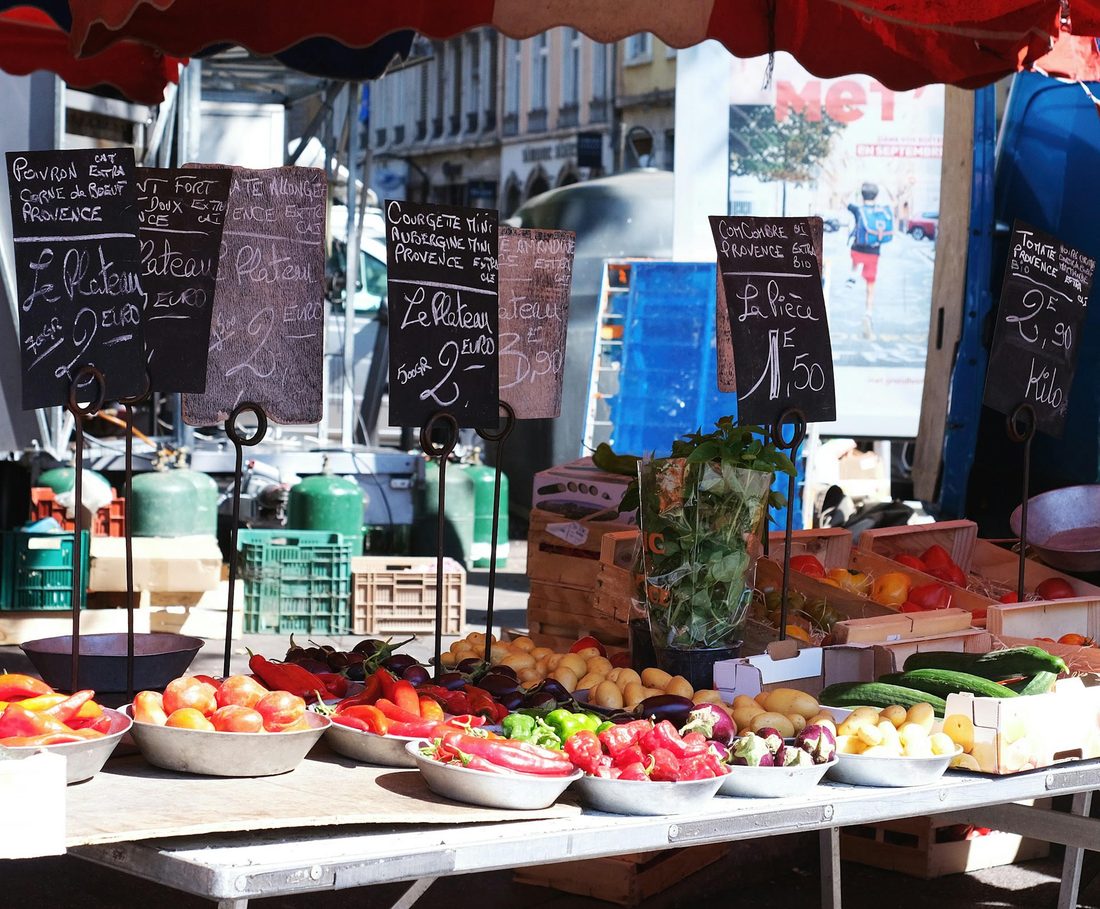
What should you try here? Quenelles, salade lyonnaise, cervelle de canut and tarte à la praline.
What does the weekend revolve around? Bouchon lunch, Les Halles, wine bars and possibly one more refined dinner.
Accessibility and stay: from Amsterdam you fly direct in roughly 1 hour and 35 minutes.
Budget and best period: average to higher. Spring and autumn.
Point to watch: the traditional cuisine is quite hearty. Three classic bouchons in a row might be a bit too much of a good thing.
Reims & Champagne - when wine becomes the destination itself
For a genuine wine weekend I would rather go to Champagne than simply pick a city with good wine bars. Around Reims and Épernay lie wineries, producers and cellars you can visit. Épernay, with Avenue de Champagne, forms a natural centre, while Reims adds more city life, restaurants and culture.
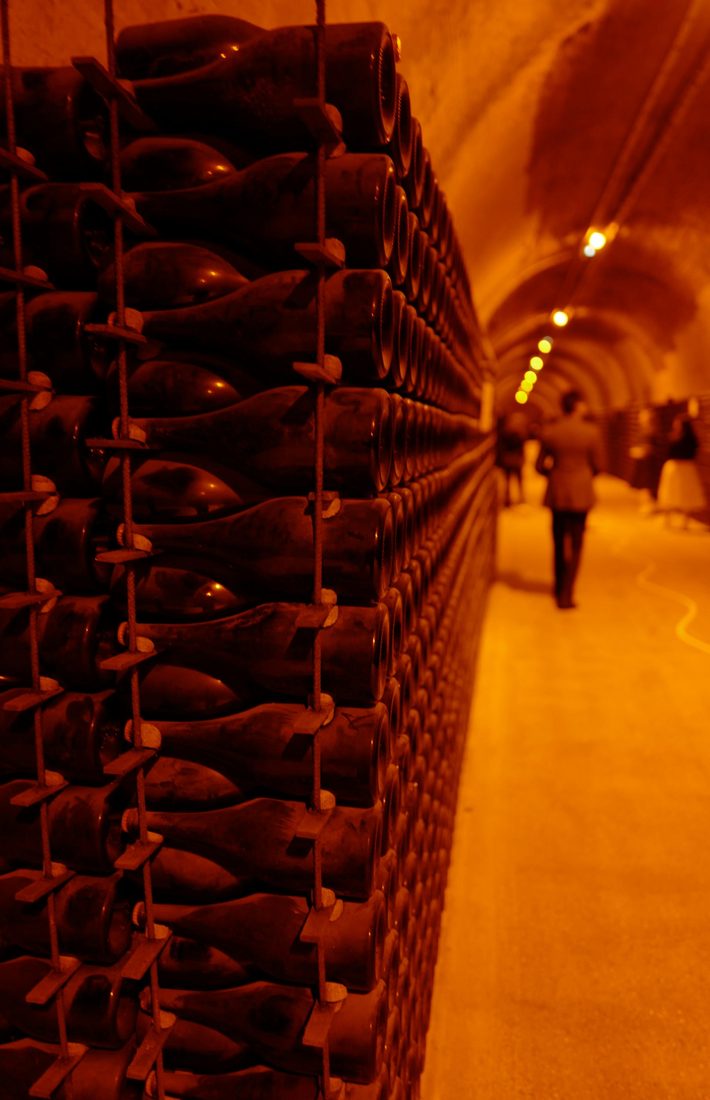
What should you try here? Champagne, jambon de Reims and biscuit rose de Reims.
What does the weekend revolve around? One or two cellar visits, unhurried lunches and getting to know different styles of Champagne.
Accessibility and stay: Amsterdam-Reims currently takes from around 5 hours and 6 minutes by train, changing in Paris.
Budget and best period: higher. Spring and early autumn.
Point to watch: tastings require planning. If you want to visit producers outside the city, arrange transport so that no one has to drive after several tastings.
Surprising culinary cities
Thessaloniki - markets, meze and long evenings
Thessaloniki has a stronger gastronomic identity than many Dutch city trippers expect beforehand. Modiano and Kapani are important food markets and the local cuisine combines influences from various periods and cultures. In and around the markets you'll find fish, seafood, cheeses, olives, koulouri and sweets, among other things.
What should you try here? Bougatsa, koulouri, meze, grilled fish and local sweets.
What does the weekend revolve around? Markets, coffee culture, long lunches and simple tavernas alongside more modern restaurants.
Accessibility and stay: there are direct flights from Amsterdam. Allow roughly three to four hours for the flight; actual block times vary by schedule.
Budget and best period: lower to average. Spring and autumn.
Point to watch: in July and August the heat can make walking around and long lunches less appealing.
Ljubljana - small centre, big role for food
Ljubljana is interesting if you're specifically not looking for a huge food city. The Central Market sits right in the centre and combines an open air market, covered market and small eateries along the Ljubljanica. From roughly March to November, Open Kitchen also takes place on sunny Fridays, where restaurants from Ljubljana and other parts of Slovenia cook.
What should you try here? Slovenian cheeses and cured meats, local wines, burek and modern interpretations of regional dishes.
What does the weekend revolve around? Market, lunch by the river, wine bars and a compact city you can easily explore in between.
Accessibility and stay: Amsterdam-Ljubljana takes roughly 1 hour and 45 minutes direct.
Budget and best period: average. April-June and September-October.
Point to watch: Open Kitchen is seasonal and weather dependent. So don't build your whole weekend around one market visit.
Are you often looking for destinations that don't automatically make it to the top of your list? Then also check out our guide to the most beautiful lesser known cities in Europe.
Brussels - beer, chocolate and good food less than two hours away
Brussels is a handy reminder that a culinary weekend doesn't necessarily need a flight. Besides fries, waffles, chocolate and beer, the city now has a much broader restaurant scene, with food markets, microbreweries and modern restaurants.
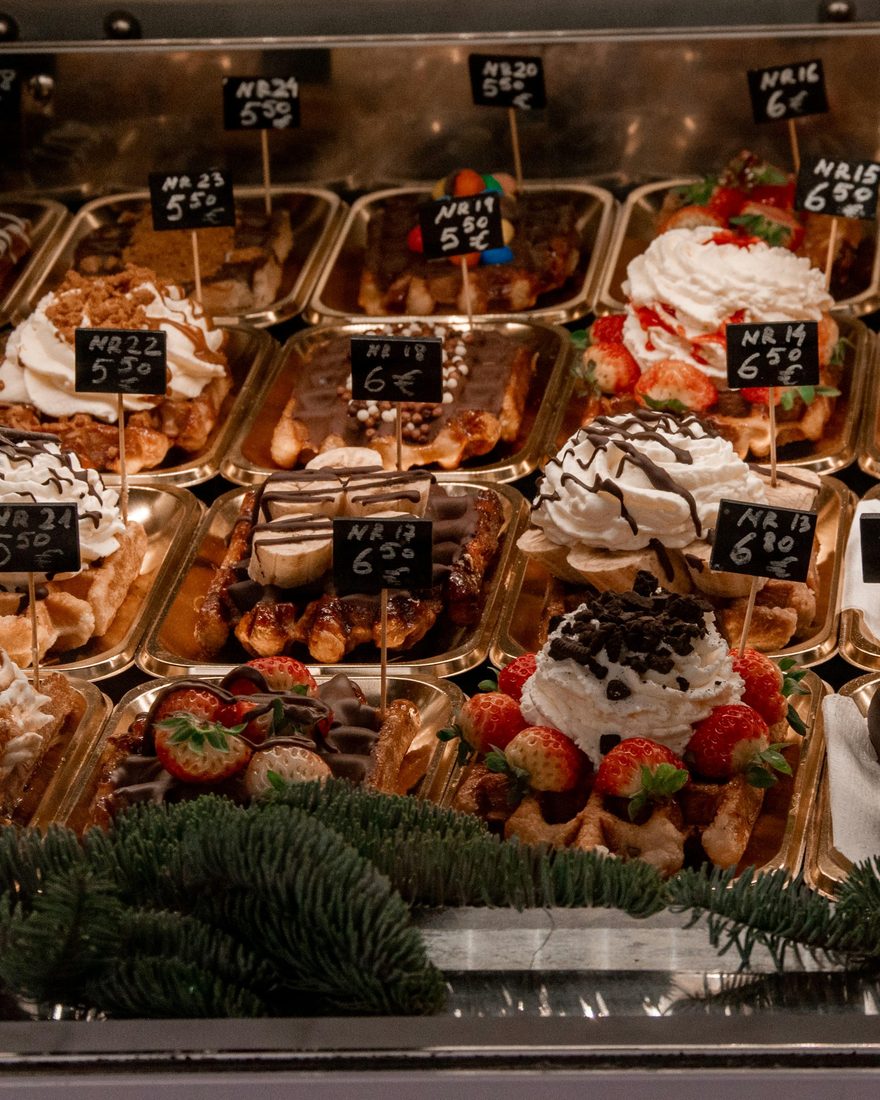
What should you try here? Shrimp croquettes, mussels and fries, Brussels waffle, chocolate and Belgian beers.
What does the weekend revolve around? Brewery or beer bar, chocolate, a long lunch and one good dinner.
Accessibility and stay: Eurostar takes roughly 1 hour and 56 minutes from Amsterdam to Brussels.
Budget and best period: average. All year round.
Point to watch: around the Grote Markt you quickly pay for the location. For food it's often smarter to also look outside the most touristy streets.
Vienna - coffee house, Beisl and wine within the same city
Vienna earns its place because food here belongs to different moments of the day during the trip. You can start in a traditional coffee house, have lunch in a Beisl and later head to a Heuriger where wine from Vienna's own vineyards is poured. Vienna still has roughly 600 hectares of vineyards within the city limits.
What should you try here? Wiener Schnitzel, Tafelspitz, Kaiserschmarrn and pastries.
What does the weekend revolve around? Coffee house, Naschmarkt, classic cuisine and Viennese wine. The Naschmarkt has around 130 stalls and eateries.
Accessibility and stay: flying direct takes roughly 1 hour and 45-50 minutes.
Budget and best period: average to higher. All year round.
Point to watch: well known coffee houses can have long queues. Don't automatically pick the address that's on every top 10 list.
Culinary weekend or wine weekend?
A culinary city trip and a wine weekend look similar, but the planning differs.
| Trip type | Suits you if... | Examples | Point to watch |
|---|---|---|---|
| Culinary city trip | restaurants and markets need to be close by | Bologna, Lyon, Palermo | Book popular restaurants |
| City + wine | you want to combine both | Porto, Turin, Vienna | Sometimes an excursion outside the centre needed |
| Genuine wine weekend | producers and cellar visits are central | Champagne, Piedmont | Arrange transport in advance |
| Fine dining | one special dinner is the priority | San Sebastián, Lyon | Budget and booking needed |
| Casual eating | you want to try lots of small things | Seville, Palermo, Thessaloniki | Less tightly plannable |
In a wine weekend, the trip revolves more around the wine region itself than around the city. You might plan one or two winery visits, take plenty of time for lunch, and choose a base from which you can reach several producers or villages. Champagne and Piedmont suit this setup well, because wine truly becomes part of the daily programme there.
If you'd rather combine wine with restaurants, culture and a lively city, Porto, Turin and Vienna make more sense. There you can simply explore the city during the day and later join a wine bar, tasting or restaurant. That way wine stays an important part of the weekend, without you having to plan the whole trip around wineries.
So the main difference lies in how central wine needs to be during the trip. If you mainly want to eat well and taste something special now and then, choose a culinary city trip instead. If you want to visit several producers and get to know the region, a genuine wine weekend suits you better.
Where can you eat well affordably?
Culinary travel certainly doesn't have to mean ordering a tasting menu twice a day.
| Destination | Price level | Good food on an average budget? | What to look out for |
|---|---|---|---|
| Palermo | Lower | Yes, very good | Street food and markets |
| Thessaloniki | Lower to average | Yes | Tavernas and lunch |
| Seville | Average | Yes | Tapas outside tourist hotspots |
| Porto | Average | Yes | Local restaurants outside Ribeira |
| Bologna | Average | Yes | Trattoria over fine dining |
| Ljubljana | Average | Yes | Market and lunch menus |
| Brussels | Average | Reasonably | Centre can get expensive fast |
| San Sebastián | Higher | Possibly | Pintxos versus fine dining |
A smart approach is to make one meal a day the important one. Book, for example, the restaurant you really want to go to in the evening, but have lunch at a market or in a simple local spot. That way food stays the reason for the trip without the bill dictating every other choice for three days straight.
Michelin or rather local food?
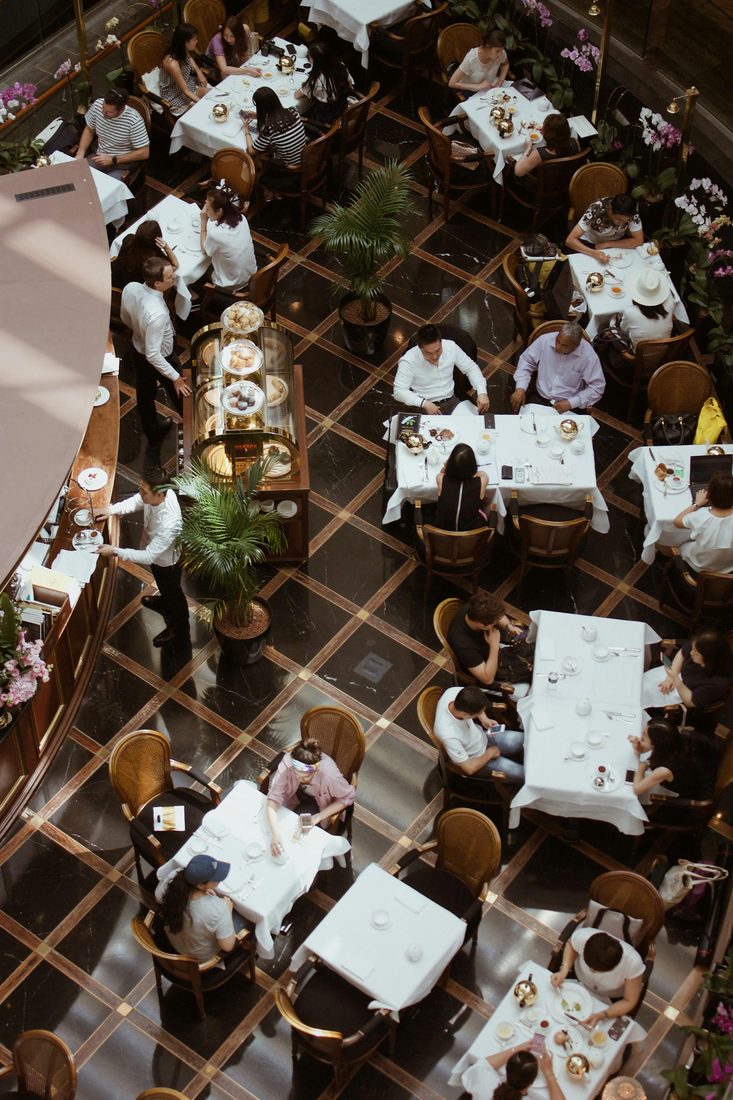
Michelin can be a fantastic reason to plan a weekend. San Sebastián and Lyon in particular have enough gastronomic reputation for one specific restaurant to be the whole reason for the trip. San Sebastián has both traditional pintxos bars and several restaurants at the highest Michelin level.
But a culinary weekend away doesn't automatically get better as the number of stars goes up. Bologna without a trattoria, Palermo without a market and Vienna without a coffee house would lose an important part of their culinary character.
My preference for a weekend of two or three nights: genuinely pick out one meal in advance, and keep the rest deliberately varied. Combine, for example:
- one more elaborate dinner;
- one market;
- one simple local lunch;
- aperitivo, pintxos or a wine bar;
- enough time to stumble upon something on the spot.
That usually gives you more of a feel for a destination than three long tasting menus in a row.
What does a culinary weekend away cost?
The amounts below are broad planning indications per person, based on two people sharing a hotel room. Transport, accommodation, food and one culinary activity are roughly included. These are not current offers.
| Weekend type | Duration | Eating style | Indicative budget p.p. |
|---|---|---|---|
| Affordable culinary city break | 2 nights | Market, local, casual | €300 - €500 |
| Mid-range culinary trip | 2-3 nights | Mix of restaurants and casual | €450 - €700 |
| City trip + one fine dining evening | 3 nights | Mix + special dinner | €600 - €950 |
| Wine weekend | 2-3 nights | Tastings + restaurants | €500 - €900 |
| Luxury gastronomic weekend | 2-3 nights | Boutique hotel + fine dining | €900 - €1,500+ |
The biggest differences usually aren't in coffee or lunch, but in flight, hotel and the level of restaurant you choose.
Five ways to budget smarter
- Book one more expensive dinner instead of every evening.
- Choose lunch menus when a good restaurant offers them.
- Eat outside the busiest tourist streets.
- Compare total transport, including airport transfer.
- Plan wine tastings in advance, so you don't need unnecessary extra transfers.
Culinary destinations by season
Spring
Bologna, Porto, Seville and Lyon are strong in spring. Terraces come back without the southern European heat already dictating the pace of your weekend. Champagne also works well when you want to combine tastings with cycling or walking among the vineyards.
Summer
San Sebastián and Ljubljana are pleasant summer choices. Ljubljana also has Open Kitchen on sunny Fridays during the warmer part of the year.
I would only choose Seville and Palermo in midsummer if you can cope well with heat. After all, on a culinary weekend you also want to feel like walking around the city during the day.
Autumn
For food and wine this may well be the most interesting season. Piedmont gains extra appeal from truffles and harvest produce, Champagne from the wine region and Porto from the combination of city and Douro. Specific harvest dates and festivals vary by year, so check these before booking the weekend entirely around one event.
Winter
Vienna is almost made for this type of trip: coffee houses, hearty dishes and wine bars work even when it's cold outside. Bologna and Brussels are also suitable, since food and culture depend little on good weather. Palermo instead offers a milder southern European variant.
Culinary weekend for two or with friends?
With your partner
For two people you can more easily book one special restaurant and build the weekend around long lunches, wine and a boutique hotel. Bologna, San Sebastián, Porto, Lyon and Piedmont work well for that. If you want food to be part of a broader trip for two, also check out our guide to a romantic weekend away.
With friends
With four or six people, booking becomes more important. Budget differences also become more visible: one person wants a tasting menu, another would rather try different tapas bars. Seville, Porto, Thessaloniki, Brussels and Ljubljana work well when you want plenty of choice between casual and more elaborate eating.
If you're specifically planning a trip with girlfriends, our guide to a girls' weekend also helps with things like room arrangements, group budget and activities beyond restaurants.
How to plan a culinary weekend without overbooking everything
The biggest risk with a food trip is that your planning ends up looking more like a spreadsheet than a weekend away. So book the restaurant or winery you're really travelling for first. Build the rest more loosely around it.
A simple structure often works better:
- Day 1: arrival, walk, wine bar or aperitivo, dinner.
- Day 2: market, long lunch, explore the city, a small bite later on.
- Day 3: one culinary activity and room to go back to something you came across along the way.
Do check opening hours and fixed closing days in advance. Smaller restaurants in particular can be closed on Sundays or Mondays.
And one more thing that surprisingly often goes wrong: don't plan an elaborate wine tasting at 3pm if an eight course menu starts at 6pm.
Let MyTripMatcher find your culinary destination
Maybe you already know exactly what you want, except for the place. Three nights away, a maximum of three hours flying, plenty of local restaurants, wine you'd enjoy and around 600 euros per person. Only question: will that be Bologna, Porto, Lyon or San Sebastián?
Then it makes more sense to search from those preferences than to open another twenty city guides side by side.
MyTripMatcher can combine factors such as budget, travel time, gastronomy, atmosphere, trip length and travel companions to find destinations that fit that profile.
The best known food city doesn't automatically have to come out on top. A smaller or more affordable destination can fit much better with how you want to fill the weekend.
Fill in what matters to you for your next trip and discover which culinary destinations suit your travel style.
Discover your culinary destination
Frequently asked questions about a culinary weekend away
What are the best cities for a culinary weekend away?
Bologna is strong for Italian pasta and trattorias, San Sebastián for pintxos and fine dining, Porto for Portuguese cuisine and port wine, and Lyon for classic French gastronomy. Seville fits better if you want to try lots of different tapas. The best choice mainly depends on your favourite cuisine, budget and how many days you have.
Which European city is known for great food?
Bologna, Lyon and San Sebastián all have a very strong culinary identity, but in completely different ways. Bologna revolves strongly around regional dishes and fresh pasta, Lyon around bouchons and French gastronomy, and San Sebastián around Basque pintxos and haute cuisine. So there isn't one objectively best food city.
Where can you eat cheaply and well in Europe?
Within this selection, Palermo and Thessaloniki are the most interesting options for a lower to average budget. Seville can also work well if you mainly choose tapas and local bars. In every destination, restaurants right around the main sights tend to be more expensive than addresses a few streets further on.
What is a fun culinary city trip?
Bologna is a good all round choice because food takes centre stage and the city is compact enough for two or three nights. Porto combines restaurants with wine and views over the Douro. For something a little less obvious, Thessaloniki and Ljubljana are interesting. So don't just look at restaurants, but also at the rest of the weekend.
Which destination is good for a wine weekend?
Champagne is the most outspoken wine destination in this guide. Porto is stronger when you want to combine wine with a fully fledged city trip. Turin and Piedmont work well when regional cuisine and wine are both important. Vienna is surprisingly interesting because of the vineyards and Heurige within the city limits.
What does a culinary weekend away cost?
For an affordable European city break you can roughly plan 300 to 500 euros per person. A mid-range weekend with two or three nights comes out more around 450 to 700 euros. Add fine dining, several tastings or a luxury hotel, and the budget can easily head towards 900 euros or more.
Which city is suitable for a romantic culinary weekend?
Bologna, Porto, San Sebastián and Lyon work well for couples because food is easy to combine with walking and a nice hotel. For wine and a calmer pace, Champagne and Piedmont are interesting. The best choice mainly depends on how much of the weekend you actually want to revolve around food and drink.
How many days do you need for a culinary city trip?
Two nights are enough for Brussels, Bologna or Lyon if you travel efficiently. For Porto, Palermo, San Sebastián, Vienna and Thessaloniki, three nights are more pleasant. If you choose a wine region such as Champagne or Piedmont, three nights also makes more sense because transfers and tastings take extra time.
Which culinary destination will you choose?
A culinary weekend away doesn't have to mean the city with the most Michelin stars. Far more important is whether the destination fits what you want to eat, how much you want to spend and how you want to structure the days.
If you mainly want fresh pasta and trattorias, that calls for a different trip than pintxos, street food or a weekend among wine producers. Then look at travel time and available nights and narrow the options down to two or three.
Want to compare cities beyond their food culture too? Then check out our guide to 18 fun city trips in Europe.
Or start instead from your own preferences: fill in what you're looking for at MyTripMatcher and discover which destination fits your ideal culinary weekend.
With Love, team MTM